Most people at a baccarat table can name the 3 bets and none of the rules that resolve them. The draw is not a decision, the commission is not a fee someone invented on the spot, and the shoe has no memory. Knowing which is which changes what you back.
How a Sunwin baccarat hand is decided
Each hand deals 2 cards to player and banker, totals them modulo 10, then applies a fixed third card rule nobody at the table controls. Banker wins pay 0.95 to 1 after commission; player wins pay even money. Standard baccarat maths puts the house edge at 1.06% on banker and 1.24% on player.
Why the third card rule settles more hands than the deal
Roughly 2 hands in 5 end without any third card, which means the rule table decides the rest.
What the 2-card total tells you before any draw
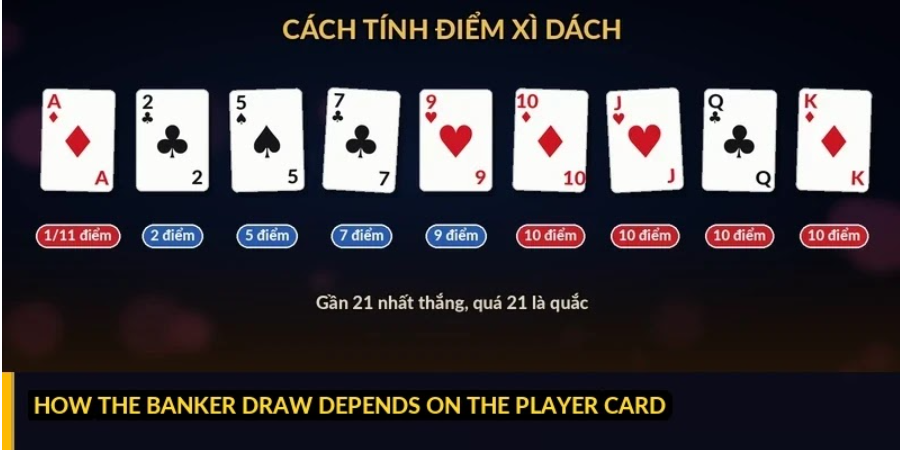
Tens and face cards count as 0, aces as 1, everything else at face value, and only the last digit of the sum survives. A 7 and an 8 make 5, not 15. Totals of 8 or 9 on the first 2 cards end the hand immediately for both sides. The Sunwin baccarat lobby on SUNWIN shows both totals before any draw animation runs, which is the moment to read them rather than after.
How the banker draw depends on the player card
The banker never chooses. The sequence runs the same way every hand:
- Player draws on a total of 0 to 5 and stands on 6 or 7.
- Banker then draws according to its own total and the player's third card.
- Both hands stop; the higher last digit takes the round.
Line 2 is why the Sunwin baccarat banker side wins slightly more often. It acts with information the player side never had.
The mechanics behind commission and each payout
The 5% commission on Sunwin baccarat is not a service charge. It is the correction that stops the banker bet from being strictly better than the house.
Why the banker bet pays 0.95 instead of 1
Here is what the 3 bets return on a 1 million stake, using standard published baccarat figures:
Bet
Payout
House edge
Expected loss per 1 million
Banker
0.95 to 1
1.06%
10.600
Player
1 to 1
1.24%
12.400
Tie
8 to 1
14.36%
143.600
Without the commission the banker bet would carry a negative edge for the house, which no table anywhere would offer.
What the tie bet trades away for its 8 to 1 odds
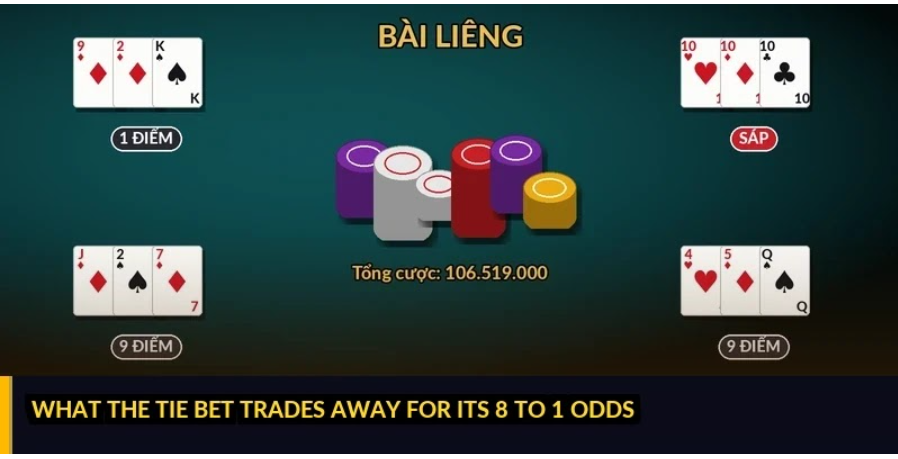
Ties happen on roughly 9.5% of hands, and an 8 to 1 payout underprices that by a wide margin. The gap is what produces the 14.36% figure in row 3. Players treat that wager the same way at almost every table: a small stake, placed by habit and rarely reviewed against what it returns. Over 200 hands the tie bet costs about 13 times what the banker bet costs on baccarat at Sunwin.
What the shoe and the shuffle actually change
Shoe mechanics on Sunwin baccarat change the variance you feel, not the edge you pay.
How a shoe is built and why the count barely moves
Live baccarat tables deal from a shoe of 6 or 8 decks, and the differences between them are small:
- An 8 deck shoe shifts the banker edge by hundredths of a percentage point
- Removed cards change draw probabilities far less than they do in blackjack
- The third card rule is fixed, so no card removal opens a new decision
- Reshuffles reset composition without altering any payout on the table
The honest limitation: nobody outside the operator can verify shuffle timing on any given table, so treat shoe composition as noise rather than information.
Why past hands carry no weight into the next one
A scoreboard showing 9 banker wins in a row describes what happened, not what follows. Each hand on Sunwin baccarat draws from the same rule table and the same shoe composition as the hand before it. The banker edge of 1.06% already includes every streak that has ever occurred. Betting against a streak and betting with it have identical expected value, which is the part scoreboards are designed to make you forget. The same reflex follows players onto TÀI XỈU SUNWIN tables, where the history panel is just as prominent and just as useless for prediction.
Common questions about Sunwin baccarat
3 questions come up more than any others once the rules are clear.
Does the banker bet always beat the player bet?
On expected value, yes. Banker costs 1.06% against 1.24% for player, even after the 5% commission is deducted from wins. That advantage is a long run average across thousands of hands, so it says nothing about which side wins the hand in front of you.
Can card counting work at a baccarat table?
Not usefully. Counting in baccarat at Sunwin or anywhere else shifts the edge by fractions of a percentage point, and only near the end of a shoe. The third card rule removes the decisions that make counting profitable in blackjack, so the effort returns almost nothing.
What happens to my stake when a hand ends in a tie?
Banker and player stakes are returned at full value, with no commission deducted:
- A tie pushes the main bets and pays only the separate tie wager
- Your bankroll stays flat, so a tie still consumes time and attention
The mechanism decides more than the scoreboard does
Sunwin baccarat is unusual among casino games because almost nothing is left to the player. You pick 1 of 3 bets, and the rules do the rest. That is why the only decision worth thinking about happens before the cards move: banker at 1.06%, player at 1.24%, or a tie bet that costs more than both combined. Watching the scoreboard for a pattern is the one habit that changes none of those numbers. Knowing why the commission exists tells you more than 100 hands of history ever will.

Leave a Comment
Your email will not be published. Comments are moderated before appearing.